
Last updated November 14, 2026
 Whole-home duct cleaning
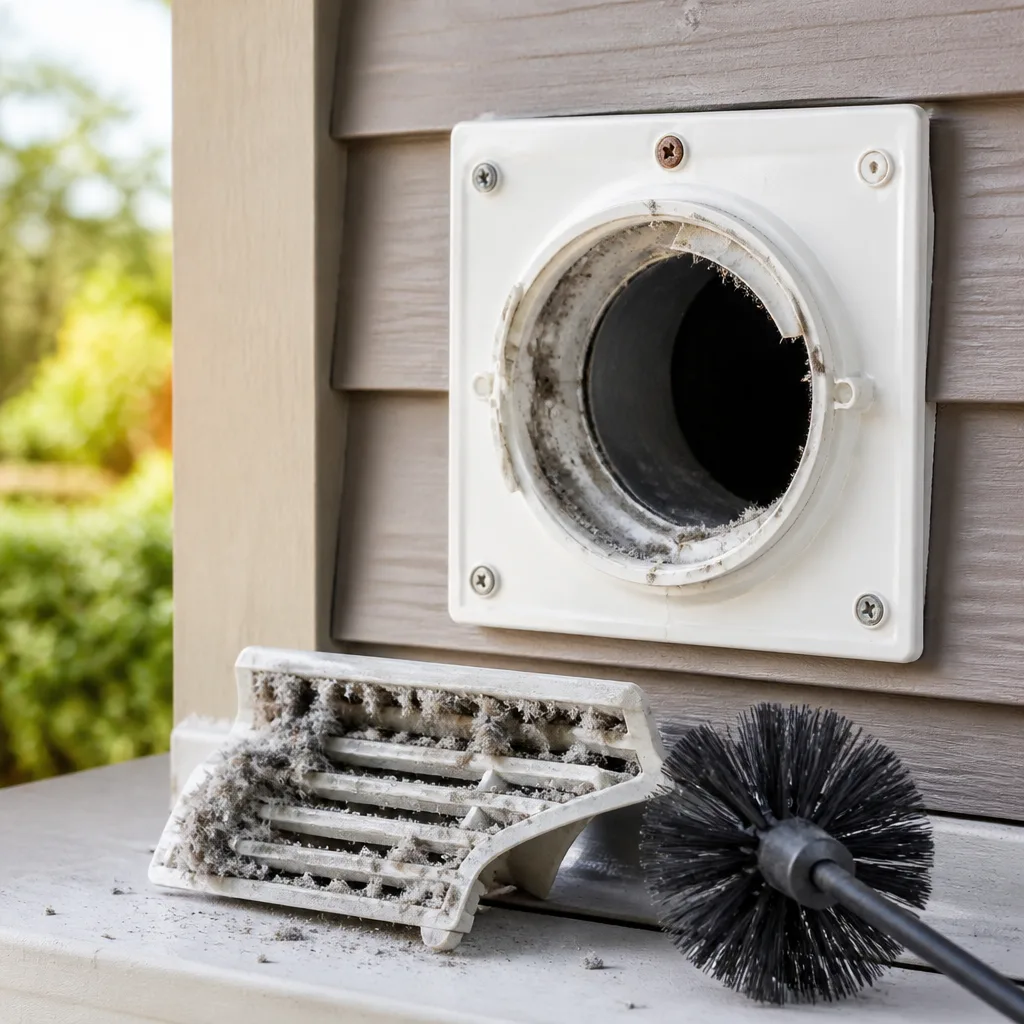 Dryer vent cleaning
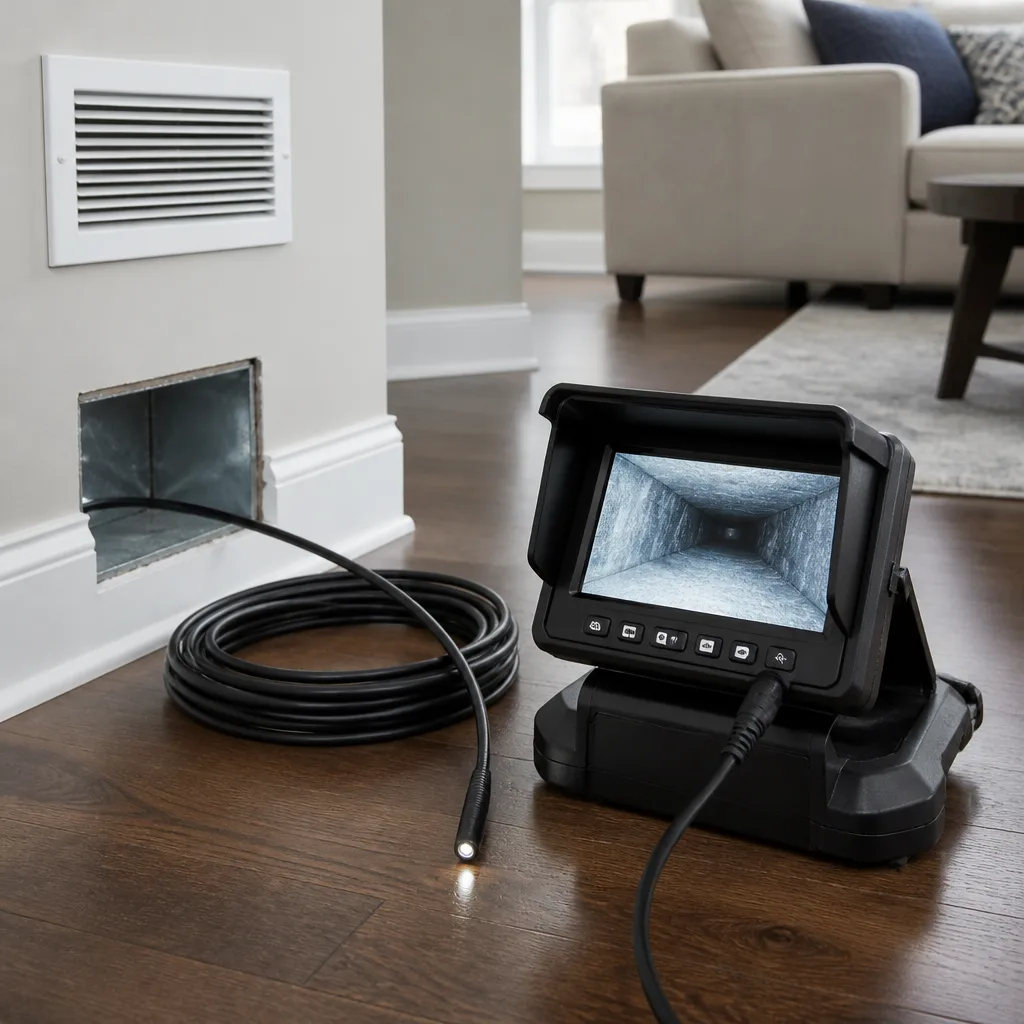 Camera inspection
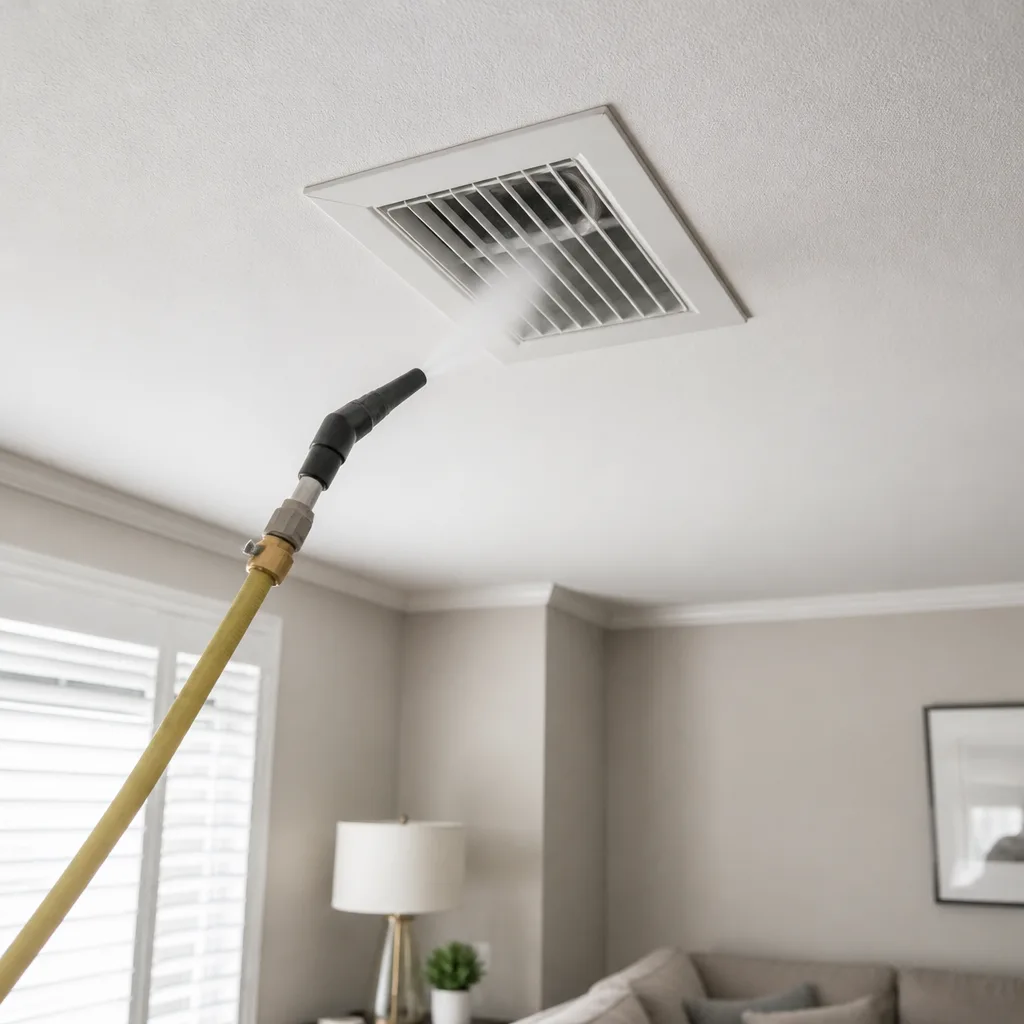 Sanitizing & deodorizing
Whole-system duct and dryer vent check with before-and-after photos - you see exactly what came out of your vents
That "$99 whole-house special" is a bait ad - the real number appears once they are in your hallway, or the "clean" is a shop-vac at the register. We photograph the inside of your ducts before and after instead.
Air Duct Cleaning Maintenance Checklist for Stamford Homeowners
Changing your filter every 90 days while ignoring a disconnected duct boot is like rotating your tires on a car with a bent frame. You’re maintaining the wrong thing, and the part that actually fails never gets looked at. Most duct advice treats your system as one unit on one calendar. It isn’t. Supply registers, return plenums, flex duct connections and the air handler cabinet all wear on different timelines, and a Stamford home’s humidity, renovation dust and occasional pest activity hit each one differently. This guide is a component-by-component checklist, not a date on a wall. You’ll learn what to inspect yourself, what needs a technician’s camera, how to log condition over time, and which red flags should pause a cleaning and trigger a repair assessment first.
Quick Answer
There is no single “clean every X years” rule that fits every home. A practical maintenance checklist for a Stamford home means checking the filter monthly, inspecting supply registers and return grilles every season, looking at visible flex duct connections in unfinished basements once or twice a year, and booking professional cleaning when you see debris buildup, musty odors, reduced airflow or after a renovation or pest incident. Component condition, not the calendar, sets the interval.
Styles & brands we work with
- Whole-home duct cleaning
- Dryer vent cleaning
- Camera inspection
- Sanitizing & deodorizing
Table of Contents
- Why Component Timelines Beat Calendar Dates
- Supply Registers and Return Grilles: The Front Line
- Return Plenums and Main Trunk Lines
- Flex Duct Connections and Disconnected Boots
- The Air Handler Cabinet and Coil Access
- Stamford-Specific Inspection Triggers
- How to Log Duct Condition Over Time
- Red Flags That Pause a Cleaning
Why Component Timelines Beat Calendar Dates
A duct system is not one thing. It’s a chain of components that degrade at different rates, and treating them as a single unit is how people end up over-servicing the parts that stay clean and ignoring the parts that quietly fail. The register grille in a master bedroom collects surface dust fast but rarely fails. The flex duct connection behind a knee wall in a Stamford cape can separate at a fitting and go unnoticed for years, dumping conditioned air into a crawl space and pulling unconditioned air back into the return. The two components have nothing in common except that they’re both “ducts.”
Think about what each component actually does and what it’s exposed to:
- Supply registers and return grilles are the visible edge of the system. They collect dust, pet hair and lint at the face, and they’re the easiest to check. They’re also the least likely to have a mechanical problem.
- Return plenums and main trunk lines carry the largest volume of air. They see more particulate buildup over time and are the first place a technician looks for debris accumulation and leakage at seams.
- Flex duct connections are the most failure-prone part of a residential system. Flex runs are often routed through tight spaces, strapped at intervals and connected with tape or mastic at boots and collars. Vibration, settling and pest activity work on those connections continuously.
- The air handler cabinet houses the blower and the coil. It’s where moisture, dust and biological growth tend to concentrate, and where a neglected filter shows up first.
Matching the interval to the component means you stop paying to re-clean what’s already clean while the actual weak point goes unexamined. That’s the shift this checklist is built around. It’s why a Stamford homeowner with a finished basement and a renovated kitchen needs a different inspection rhythm than the same house would have needed before the work started.
Supply Registers and Return Grilles: The Front Line
Start where you can see. Supply registers and return grilles are the check you can do in five minutes with a flashlight, and they tell you more about overall system condition than most homeowners expect. A dusty grille is normal. What matters is what’s behind it and what the pattern of dust tells you.
- Remove the grille and look at the boot. Most grilles lift out or unscrew. Behind it you’ll see the duct boot and, on many systems, the start of a flex run. Look for a clean, dry surface. A boot packed with a matted grey or black layer of debris is a sign the run needs professional attention, not a wipe-down.
- Check for even airflow across every register. Hold your hand at each supply and compare. Weak airflow at one register while others are strong usually points to a disconnected or crushed flex run, not a dirty filter.
- Look for dark streaking around the grille edge. A dark halo on the drywall around a register can indicate air leaking past an unsealed boot, pulling dust and moisture into the wall cavity.
- Sniff the return grille. A musty or stale smell at a return is the classic wet-dust signal. Note where it’s strongest. A single smelly return often traces to a specific run.
- Wipe the grille face with a damp cloth, then watch how fast it re-soils. Fast re-soiling tells you the system is moving more debris than a clean grille should see.
Do this once a season in a Stamford home. You don’t need to remove grilles every month. The filter, though, gets checked monthly, because a clogged filter stresses the blower and pushes dust past the coil. If you find a grille that hasn’t been cleaned in years and the boot behind it is packed, that’s the point where a professional air duct cleaning visit makes more sense than another wipe-down.
Return Plenums and Main Trunk Lines
The return plenum and main trunk line carry the largest air volume in the system, so they collect debris in a way the small branches never do. This is where a professional-grade machine earns its place. A shop vac at the register opening can’t reach the trunk line, and consumer blowers just stir up what’s already settled.
What to know about this component:
- Debris loads at the plenum and at low points in the trunk. Gravity pulls heavier particles down, so horizontal trunk runs and ductwork near the air handler tend to be where buildup concentrates.
- Seam leakage matters as much as debris. Older trunk lines with taped or masticated joints can open up. Leaking supply trunks dump conditioned air into a basement or attic and depressurize the house, which pulls dust in from wherever it can.
- Access holes are how you inspect a trunk line properly. A technician cuts small access points to reach the trunk, then seals them afterward. That’s normal and part of a proper cleaning, not damage.
Our technicians have up to 14 years of experience and use Rotobrush and Nikro systems, which are the same class of equipment HVAC contractors and restoration crews rely on. Those machines reach from the duct opening to the main trunk line, contact-cleaning the interior rather than blowing dust around. If you’re in a Stamford home with a long horizontal trunk in a basement ceiling, that inspection is worth scheduling before you notice a problem, because trunk leakage rarely announces itself.
In our experience, a return plenum that hasn’t been opened in a long time is where we find the most debris and the most missed seam issues. Checking it once a year, either yourself with a flashlight through an access point or by a technician with a camera, keeps the biggest component from becoming the biggest surprise.
Flex Duct Connections and Disconnected Boots
This is the part most maintenance advice skips, and it’s the part that fails most often. Flex duct connections at boots, collars and plenum takeoffs are held together by tape, mastic, zip ties or a combination, and they live in the least-visited parts of the house. When one separates, your system keeps running: it just pulls air from the crawl space, the attic or the wall cavity instead of from the return.
What a homeowner can check without tools:
- Unfinished basement and attic runs are often visible along the ceiling or between joists. Look for a flex run that’s sagging badly, crushed, kinked or hanging loose from its fitting.
- Tape and mastic joints around boot collars should look intact. Cracked, peeling or missing tape is a first sign of separation.
- Pest evidence near ductwork, such as droppings, nesting material or gnaw marks on flex, tells you to look harder at the connections nearby.
What needs a technician with a camera:
- Runs buried in walls, chases or between floors.
- A boot that’s still taped but detached behind the drywall.
- Collapsed or disconnected runs in a finished basement ceiling that you can’t open without cutting drywall.
- Whether a specific run is actually pulling air from the right place.
A disconnected boot is the single most common duct repair we handle, and it’s also the reason Air Duct Repair is a service we offer alongside cleaning. We clean it. If we find damage, we fix it, rather than handing you a referral. That matters in a Stamford house, where a lot of ductwork runs through older framing and additions that were built at different times. If you’ve got a run you suspect is loose, Stamford homeowners can book an inspection that covers both cleaning and repair in one visit.
The Air Handler Cabinet and Coil Access
The air handler is where the blower lives, and in most homes the evaporator coil sits in the same cabinet or right above it. Dust that gets past the filter lands here first. Moisture from the coil makes it stick. This is where a seasonal check pays off most.
- Check the filter monthly and replace it on the manufacturer’s schedule. A clogged filter is the most common cause of a coil that ices up and a blower that works too hard.
- Look at the coil face through the access panel, if your unit has one. A light dust film is normal. A matted layer, debris bridging the fins, or any visible growth means the cabinet needs professional attention.
- Check the condensate drain for clogs. A slow or backed-up drain line raises humidity in the cabinet, and moisture is what turns ordinary dust into growth.
- Inspect the cabinet seams and blower door for air leaks. Leaking cabinet doors pull unfiltered air straight into the blower.
- Book a professional cabinet and coil cleaning when the filter history shows repeated clogging. That’s a sign the cabinet is pulling in more dust than it should.
We use Abatement Technologies equipment for jobs that call for HEPA-level negative-air containment, which matters in a cabinet with heavy debris or contamination. We don’t do HVAC installation or refrigerant work. What we do is clean, inspect and repair the duct side of the system, and if the coil or cabinet needs service beyond that, we’ll tell you. Cleaning, repair and air-quality upgrades under one contractor still beats coordinating three.
Stamford-Specific Inspection Triggers
A checklist on a calendar ignores the events that actually load a duct system. In Stamford, several triggers should send you to the flashlight regardless of when you last cleaned.
- A spell of high humidity. Stamford summers push indoor humidity up, and any duct run in a basement or crawl space sees condensation on cool surfaces. High indoor humidity is the condition that turns settled dust into something a coil and cabinet can grow. Inspect the basement runs and the air handler cabinet after a humid stretch, and look for a musty smell at the returns.
- After renovation work. Drywall dust, sawdust and insulation fibers are finer and more aggressive than household dust. A kitchen or bathroom gut pulls debris through the system even if the crew sealed the work area. Schedule a cleaning after the dust settles, not during the demo.
- After a pest incident. Mice and squirrels get into duct runs and flex through gaps at the foundation and roofline. Droppings and nesting material in a flexible run mean the run should be inspected and cleaned, and the connection repaired if it’s chewed through. A dead animal in a duct is not a wait-and-see item.
- A new-to-you home. Previous owners’ filter habits and cleaning history are unknown. A move-in inspection resets your service baseline.
- Reduced airflow or a new musty smell. Either one is a reason to look now, not on the next scheduled date.
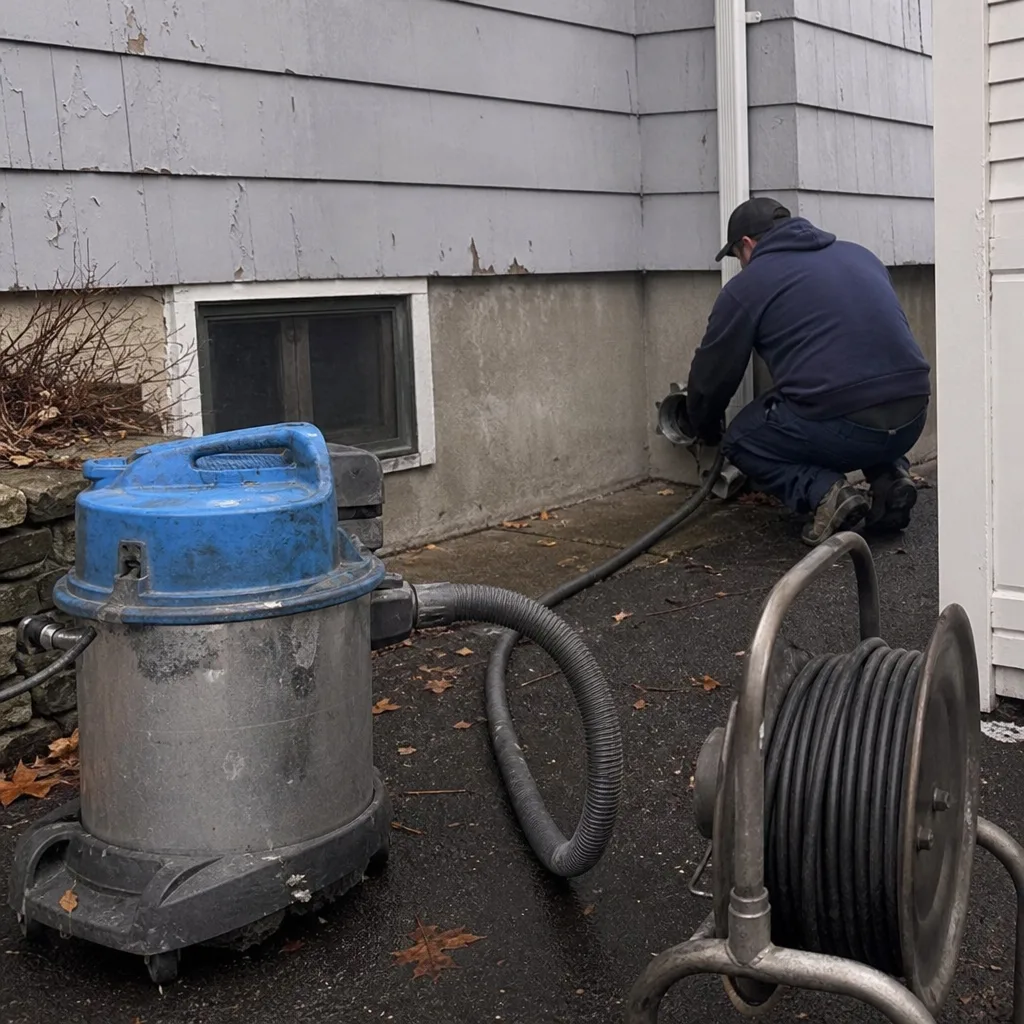
We also handle dryer vent cleaning for the same reason: the dryer vent is part of the same ventilation family and lint buildup is a fire hazard, not a minor chore. A maintenance visit that checks the ducts and the dryer vent together is a fuller picture of the home’s air and ventilation system than either check alone.
How to Log Duct Condition Over Time
The difference between a quick clean and a proper maintenance history is a written log. If you show a technician a record of what was checked, when, and what you saw, the visit starts from a baseline instead of from zero. Over a few years, that log tells you which component is actually worth watching in your house.
Set up a simple log, paper or a note on your phone, with a fixed set of fields:
- Date and trigger (seasonal check, post-renovation, pest incident, humidity spell).
- Filter: date replaced and condition when pulled.
- Each supply register: airflow rating (strong, weak, none) and boot condition.
- Each return grille: odor, dust load, dark streaking.
- Visible flex runs: intact, sagging, crushed, tape failure, pest evidence.
- Air handler cabinet: coil visibility, condensate drain status, cabinet seal condition.
- Any professional visit: what was cleaned, what was repaired, and before-and-after photos from the technician.
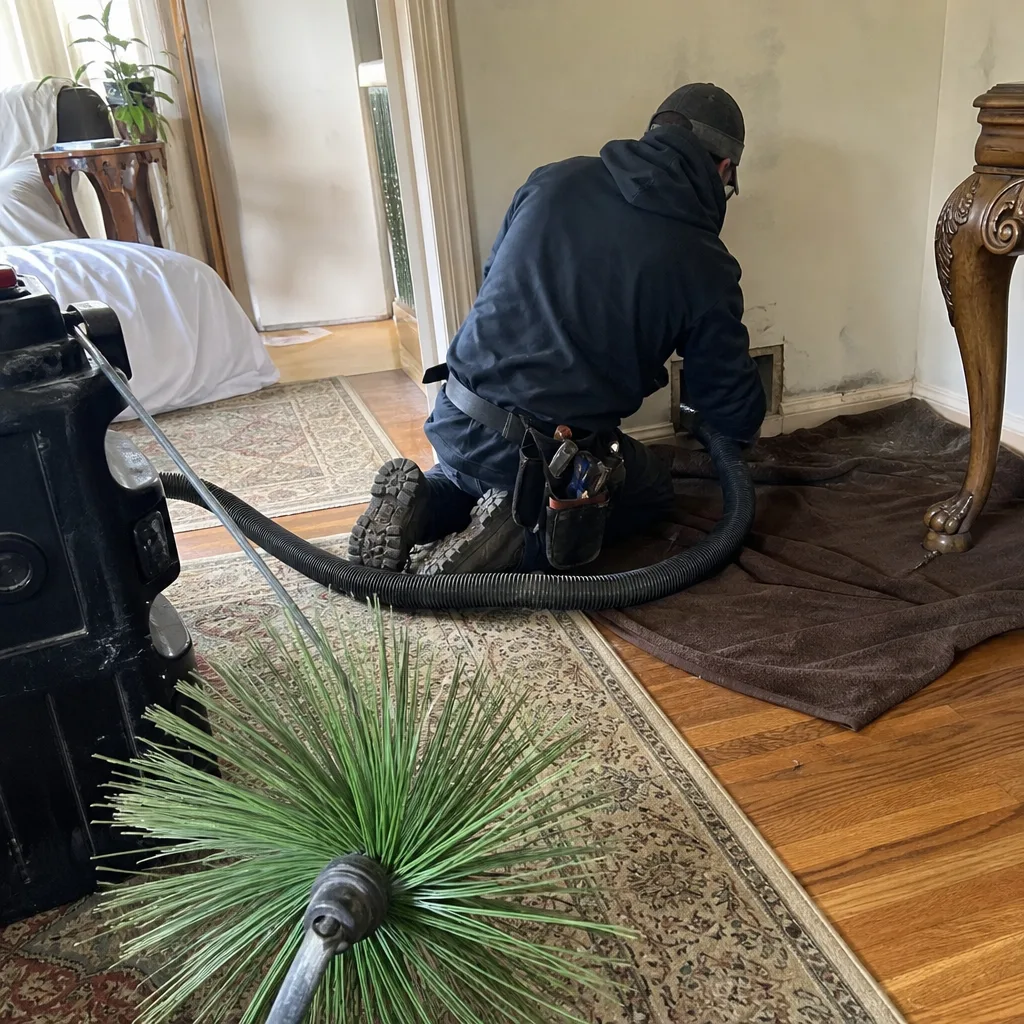
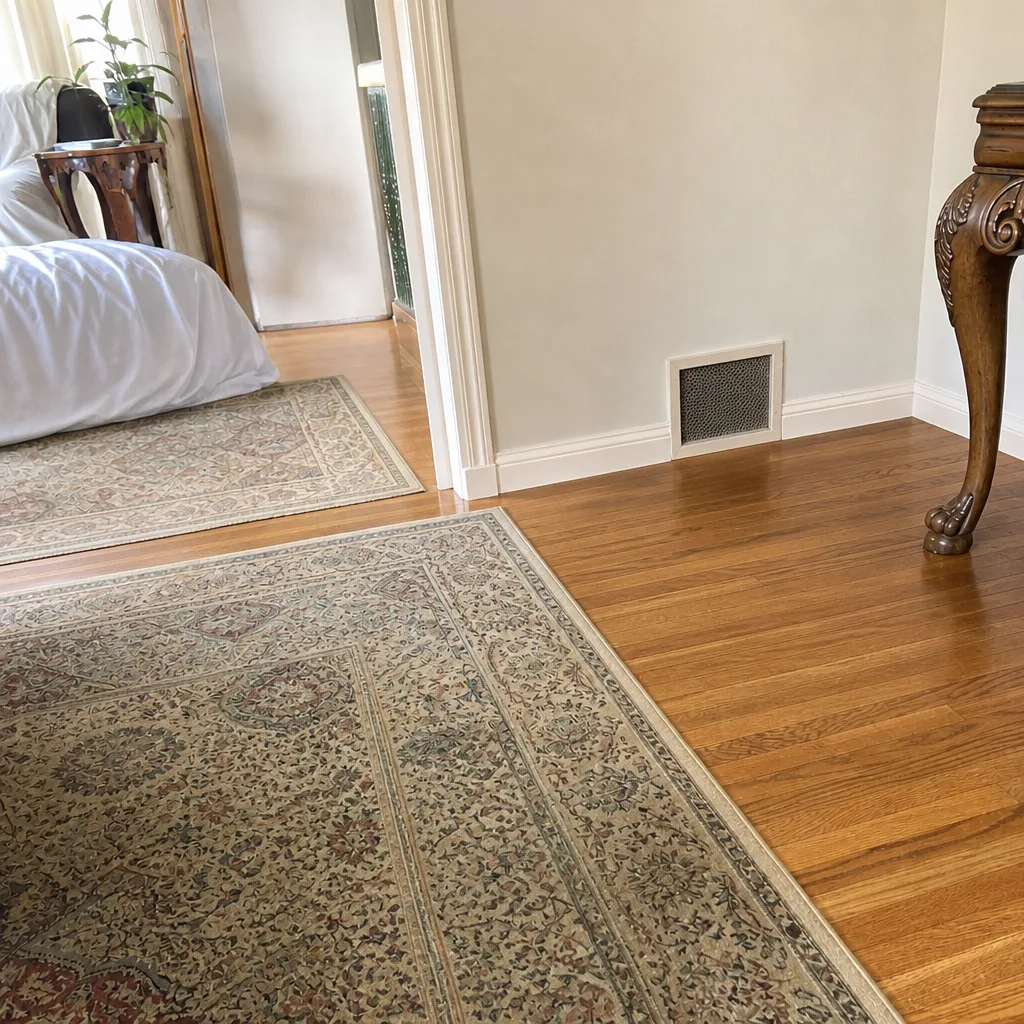
Ask for the photos. A proper cleaning produces before-and-after images of your own ducts, and those images belong in your log. We do this on every job because it answers the question homeowners actually have: did the work actually get done? It’s a record you can hand to the next technician, or to a buyer if you sell.
Two minutes per check, once a season, gives you a real history. Over two or three years, the log will show whether your system is stable or drifting, and it ends the guesswork about why one register is always cold.
Red Flags That Pause a Cleaning
A duct cleaning should be a controlled job. Some conditions mean the cleaning has to stop and a repair assessment has to happen first, because cleaning around a damaged or contaminated part makes the problem worse or spreads it.
- Crushed, collapsed or fully disconnected ductwork. Cleaning a run that’s disconnected just moves debris into the wall or crawl space. Repair the run first, then clean the system.
- Visible mold growth inside ductwork or the air handler cabinet. Standard cleaning can aerosolize spores. This is a case for HEPA-level negative-air containment, which is where our Abatement Technologies equipment comes in, not a shop vac and a duct brush.
- Pest contamination with droppings, nesting material or a dead animal in the system. The run needs inspection and remediation before it rejoins the system.
- Asbestos-containing duct wrap or insulation in an older home. Disturbing it is a health and legal problem. This needs a specialized assessment before any work begins.
- A live gas leak or burning smell from a gas appliance. Shut the system down and call your gas utility. Do not run the blower.
- A failed heat exchanger or an unsealed combustion appliance that a technician flags during inspection. Airflow work doesn’t proceed until that’s resolved.
On the airflow side of red flags, one register that blows nothing while others are strong is nearly always a disconnected run, and it gets repaired before cleaning. This is where a company that also does repair matters. If the assessment turns up a disconnected flex run, a broken boot or a separated trunk joint, we fix it on the same visit instead of leaving you to find a second contractor.
Common Mistakes to Avoid
- Replacing the filter on the calendar instead of on condition. A 90-day cadence is a starting point, but a home with pets or a dusty return needs a monthly look. Change it when it’s loaded, not when you remember.
- Assuming a dusty register means the whole system needs cleaning. A dirty grille face is surface dust. Check the boot and the airflow first, because the problem might be a loose connection, not accumulated debris.
- Hiring a crew that cleans but can’t repair. If a technician finds a disconnected boot mid-job and the company’s answer is a referral, you’ve paid for a cleaning that couldn’t fix the actual fault. Ask about repair capability before you book.
- Skipping the basement and attic inspection. The visible exterior of a duct run in a Stamford basement tells you more than anything behind a register. Look at what you can see before you call.
- Cleaning during a renovation instead of after. Drywall dust is still in the air. Wait until the work is finished and settled, then clean.
- Forgetting the dryer vent. Dryer vent lint buildup is a fire hazard. It gets its own check, not a mention at the end of the duct job.
- Not keeping records and photos. A system with no history gets re-assessed from scratch every visit, and you can’t tell when a component started to drift.
See the difference
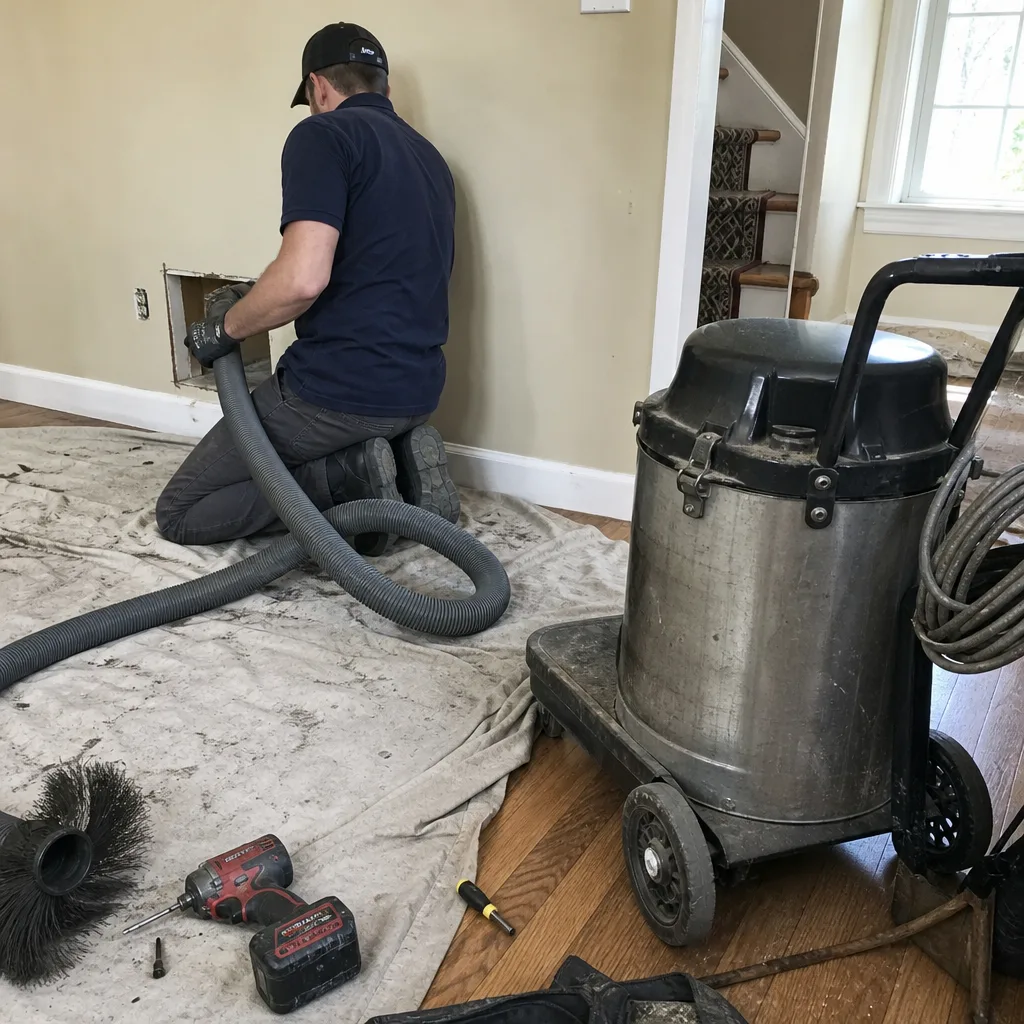 Before
 After
 Before
 After
 Before
 After
When to Call a Professional
Some conditions call for a technician, not a flashlight. Call a professional when you see debris packed into a boot you can’t reach, a musty smell that won’t clear after a filter change, weak airflow at a register with no obvious cause, pest evidence near ductwork, mold growth in the cabinet or a duct run, debris in the system after a renovation, or flex runs in a finished basement or wall that you can’t inspect. Call if you bought a Stamford home and don’t have a service history, or if you’re selling and want documentation. The estimate is free, and we set a flat price per system before work starts. Duct Cleaning Stamford offers free estimates in Stamford, call (855) 268-4131.
Frequently Asked Questions
Most homes do best with a professional cleaning every two to four years, adjusted for the triggers in this checklist rather than a fixed calendar. A home with pets, allergies, recent renovation or pest activity may need it sooner; a newer home with a well-maintained filter may stretch it. Check registers and visible runs seasonally, and let what you find set the schedule. Call (855) 268-4131 for an exact quote.
Cleaning removes debris from inside the ductwork, trunk line and cabinet. Repair fixes a physical fault: a disconnected flex run, a separated boot, a crushed section, a leaking seam. We do both, which means a cleaning that finds a disconnected boot gets fixed on the same visit instead of leaving you to schedule a second contractor. That combination is why we handle cleaning and repair under one roof.
You can inspect supply registers, return grilles and any visible flex runs in an unfinished basement or attic. Those checks catch a lot. What you can’t see is ductwork inside walls, chases and finished ceilings, which needs a technician with a camera. Start with the visible checks, log them, and call us if the airflow or smell suggests something you can’t reach.
Uneven airflow in a single room usually points to a disconnected, crushed or undersized flex run rather than a whole-system cleaning problem. The blower is moving air, but it isn’t reaching that register. An inspection that follows the run from the trunk to the boot finds the cause. In our experience, disconnected boots are the most common culprit. Call (855) 268-4131 to book an inspection.
Yes, and it belongs on it as a safety item, not a utility item. Lint buildup in a dryer vent is a fire hazard, and it accumulates on a different schedule than the HVAC ducts. Check the flexible vent behind the dryer for crushed sections and lint buildup; get a professional cleaning when it’s loaded. We clean dryer vents as a service in its own right.
Collapsed or disconnected ductwork, visible mold growth, pest contamination, asbestos-containing wrap, or a combustion problem flagged on your furnace. Each one means cleaning has to wait until the underlying issue is handled. Standard cleaning can spread contamination in some of these cases. Call us and we’ll assess it, and if it needs a repair, we do that too.
The Bottom Line
A duct maintenance checklist works when it tracks components, not dates. Check the filter monthly and the visible registers and runs every season. Know your Stamford triggers: humid spells, renovation dust, pest incidents, a home you just bought. Keep a log with photos, because a documented system is one you and your technician can both trust. And know the red flags that pause a cleaning and call for repair first. The goal isn’t to clean more often. It’s to maintain the part that actually needs it. If you’re ready to start, call us and we’ll assess your system and set a flat price before work begins.
We answer 24/7. Call (855) 268-4131 for a free estimate. Fast dispatch from 7am to 7pm, Sunday through Friday. Our technicians have up to 14 years of experience and use Rotobrush, Nikro and Abatement Technologies equipment, plus Honeywell and Aprilaire air-quality products when a system needs more than cleaning. For a full-system check that starts with Duct Cleaning Stamford, call (855) 268-4131.
Written by the team at Duct Cleaning Stamford.