
Last updated November 14, 2026
 Whole-home duct cleaning
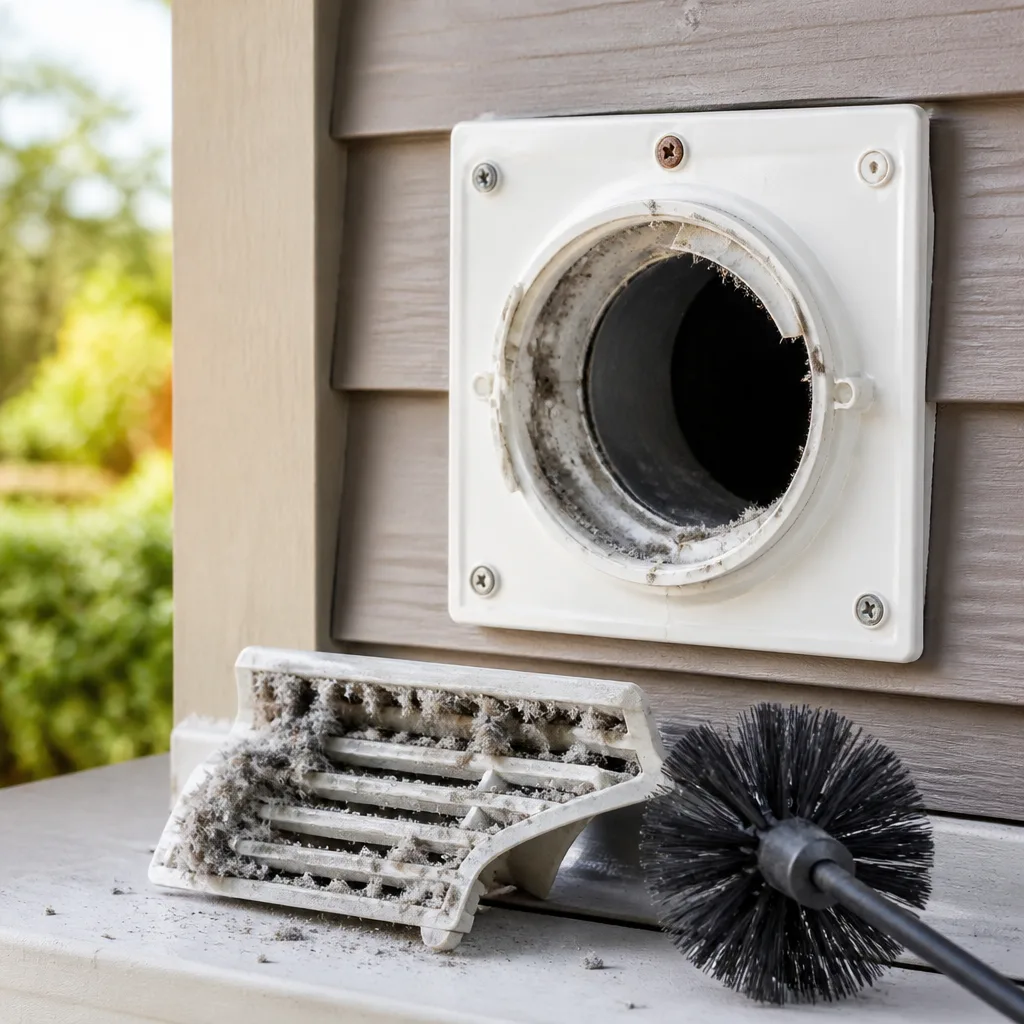 Dryer vent cleaning
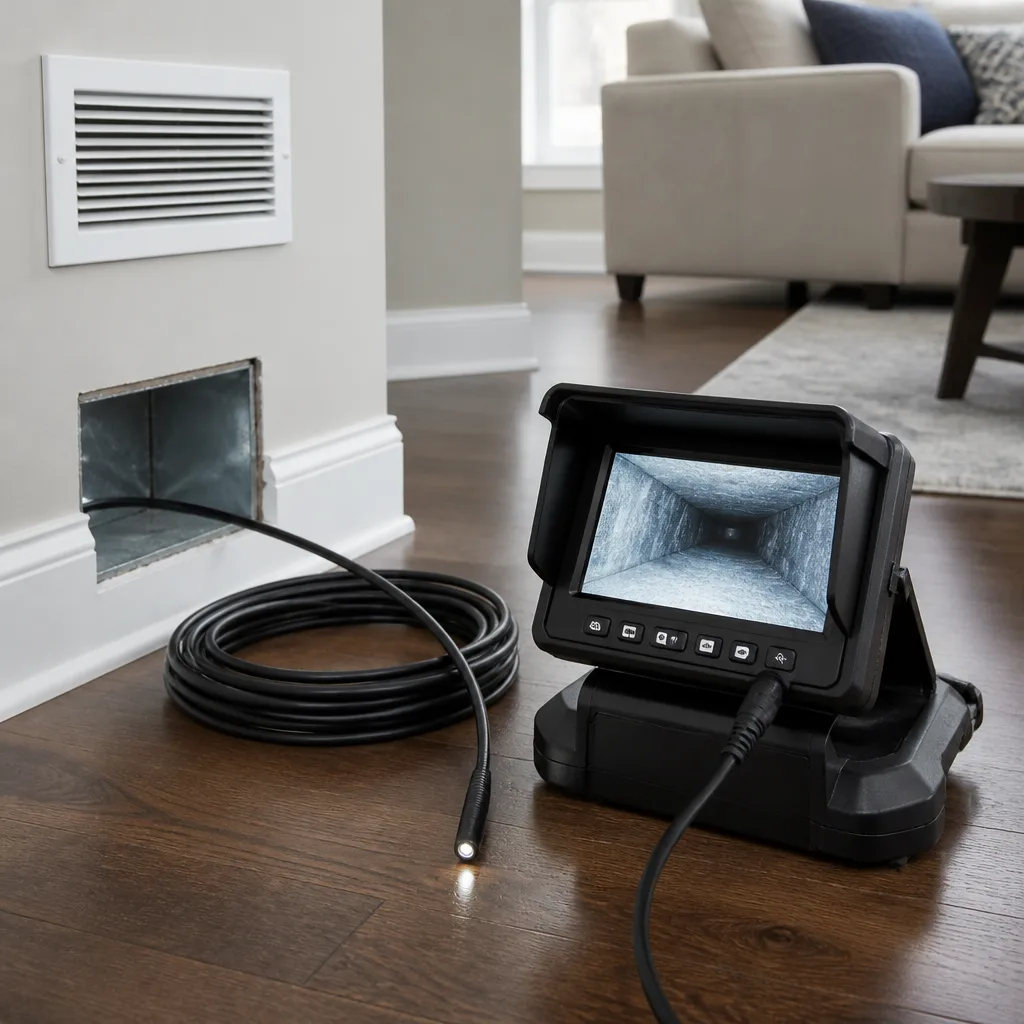 Camera inspection
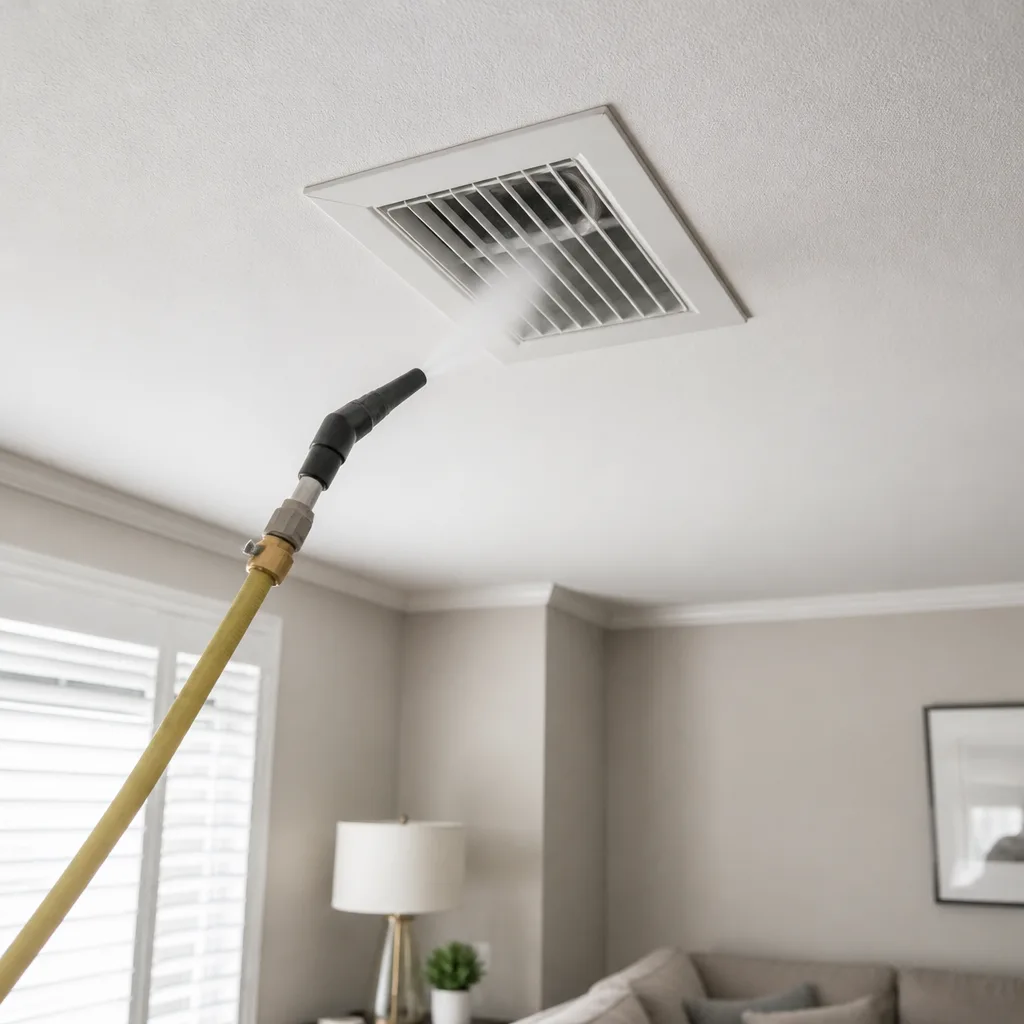 Sanitizing & deodorizing
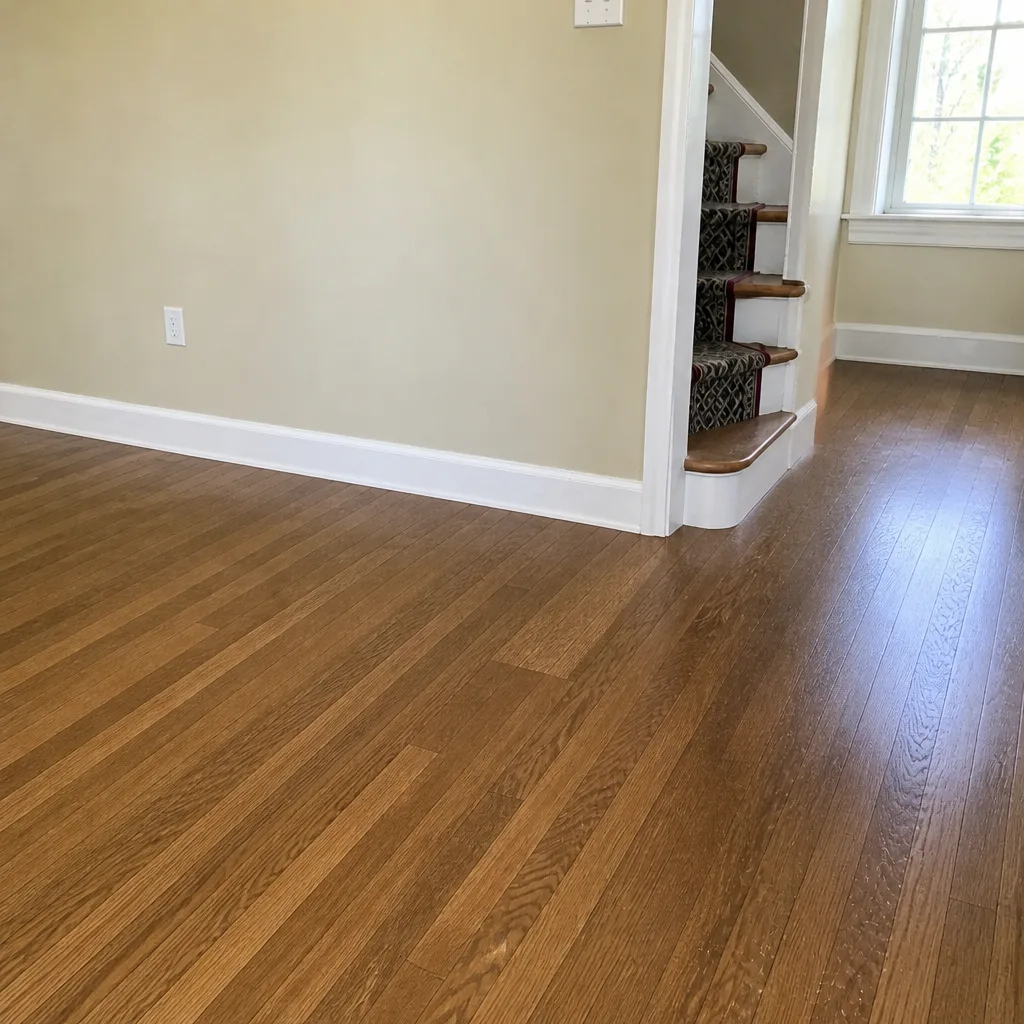
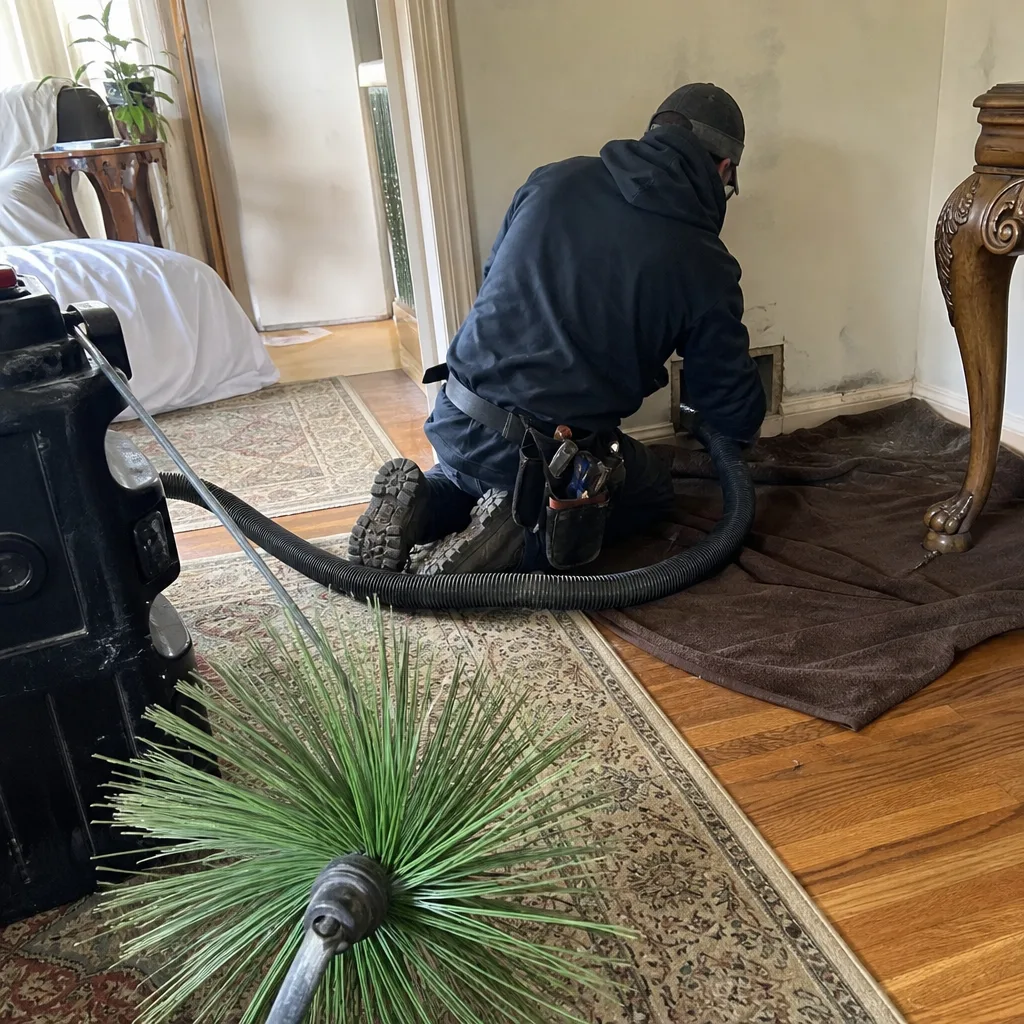
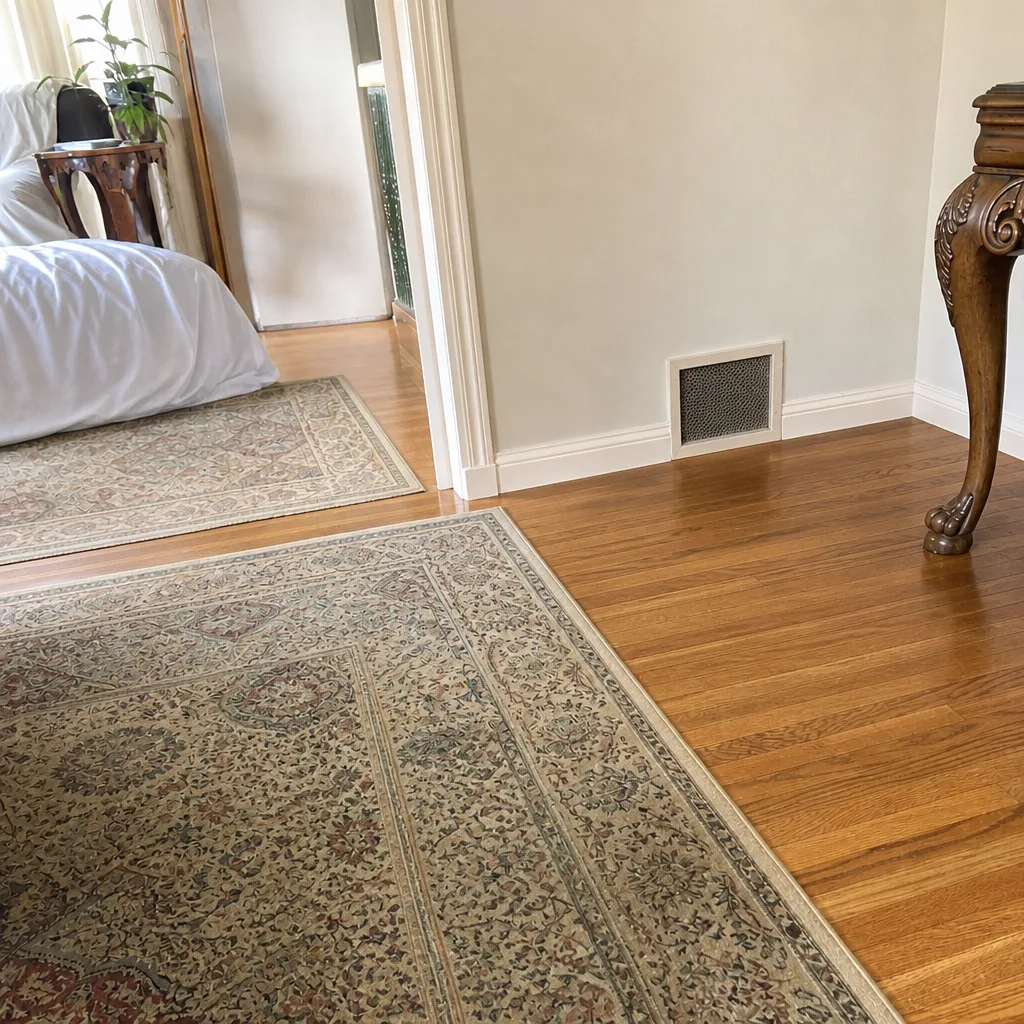
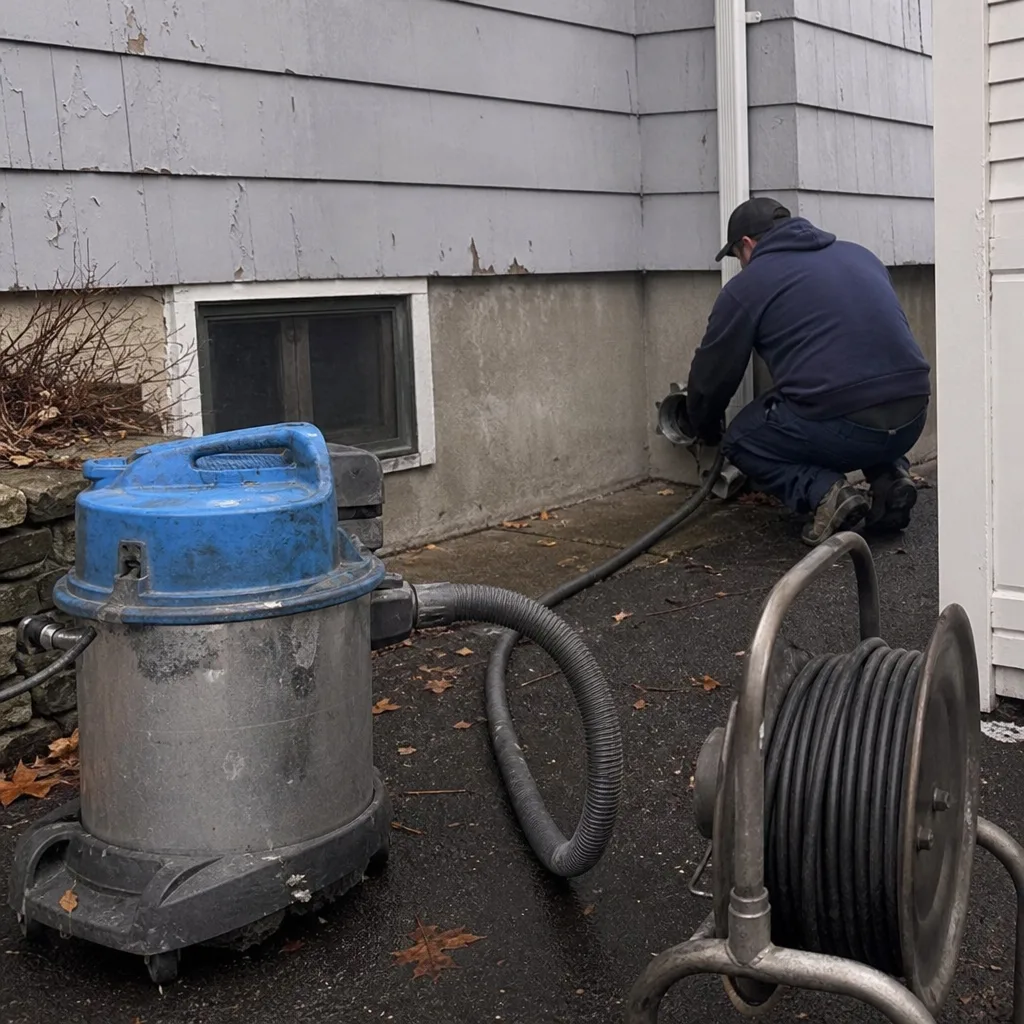
Whole-system duct and dryer vent check with before-and-after photos - you see exactly what came out of your vents
That "$99 whole-house special" is a bait ad - the real number appears once they are in your hallway, or the "clean" is a shop-vac at the register. We photograph the inside of your ducts before and after instead.
Air Duct Cleaning Permits, Codes & Inspections in Stamford, CT: What You Need to Know
Here’s the part most homeowners miss: cleaning a duct system isn’t a regulated act, but repairing one usually is. When a crew replaces a crushed flex run, splices in a new section, or reworks the trunk line, that’s now mechanical work under Connecticut’s building code, and it often needs a permit. We’ve seen this catch Stamford sellers off guard at inspection, long after the work is buried behind drywall and a fresh coat of paint. Cleaning the system and altering the system are two different categories in the eyes of a building inspector. This guide draws that line clearly, so you know when a cleaning job stays a cleaning job and when it becomes permitted mechanical work.
Quick Answer
Routine air duct cleaning in Stamford does not require a permit, because cleaning removes debris without altering the system. But repairing, replacing, or rerouting ductwork is mechanical work regulated under the Connecticut State Building Code, and it typically requires a permit and a licensed contractor. Sealing joints and small gaps with mastic or metal tape is generally exempt; replacing a full duct run usually is not. When in doubt, confirm with the Stamford Building Department before work starts.
Styles & brands we work with
- Whole-home duct cleaning
- Dryer vent cleaning
- Camera inspection
- Sanitizing & deodorizing
Table of Contents
- Does cleaning need a permit? Cleaning versus repair
- What the Connecticut State Building Code says about ducts
- How Stamford enforces HVAC permits
- Duct sealing versus duct replacement: where the line sits
- What to ask a contractor about licensure
- How a duct-related inspection actually works
- Why permit compliance matters at claim time
- What happens at resale when HVAC work is unpermitted
Does cleaning need a permit? Cleaning versus repair
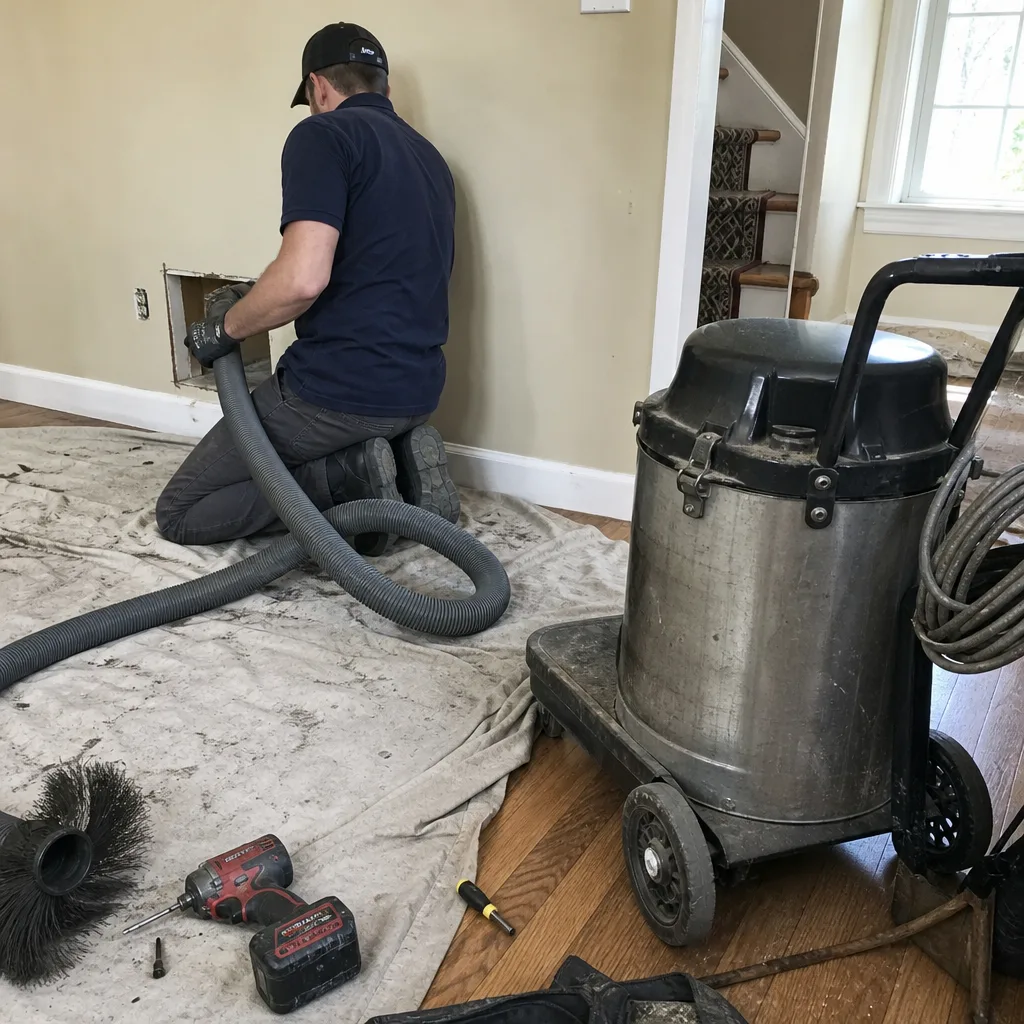
Cleaning is a maintenance task; repair is construction. That’s the cleanest way to think about it. When a technician runs an air duct cleaning pass through your system with equipment like a Rotobrush or Nikro machine, the ductwork itself isn’t modified. Debris comes out, the system goes back together as it was, and no permit is involved. Nothing in the building code treats vacuuming and agitation inside an existing duct as regulated work.
Repair crosses a different line. The moment a technician cuts into a duct, removes a damaged section, adds a new run, resizes a branch, or changes how air is distributed, the work becomes mechanical alterations under the building code. That category usually requires a permit and a licensed contractor. The distinction matters because the same crew, on the same visit, can start with a cleaning and discover a collapsed flex duct that changes the scope of the job.
Here’s a simple way to sort typical tasks:
- Permit not typically required: cleaning the full system from the opening to the main trunk line, replacing registers and grilles, sealing accessible joints with mastic or UL-listed metal tape.
- Permit typically required: replacing a length of flex or rigid duct, cutting in a new branch for a room addition, rerouting a run, resizing the trunk line, reconstructing a plenum connection.
- Ask the city: anything that changes the system’s layout or air balance, or any job where a contractor is unsure.
At Duct Cleaning Stamford, we clean it, and if we find damage, we fix it. Part of doing that responsibly is being honest about which of those repairs need a permit before we touch the duct. Our technicians have up to 14 years of experience, and they know what triggers one. If you’re planning any duct work in Stamford, this is the first question to ask whoever shows up.
What the Connecticut State Building Code says about ducts
Connecticut adopts the model building and mechanical codes with amendments, and the mechanical provisions govern how duct systems are sized, installed, supported, and connected. Those provisions exist for a reason: a duct that’s under-supported, disconnected, or routed with the wrong material doesn’t just waste energy, it can leak carbon monoxide from a combustion appliance or feed a fire. When a duct repair changes any of that, the code applies.
The practical takeaway for homeowners is this: the code doesn’t care whether the work is large or small, it cares whether the work alters the mechanical system. A short length of sealed joint doesn’t. A new duct run does. Understanding that framing helps you ask the right question before you sign an estimate.
A few concepts the mechanical code touches that come up in Stamford homes:
- Material and support: ducts must be the correct material for the application and properly supported. Flex duct that sags or runs loose is a common problem in older homes.
- Connections and sealing: joints must be mechanically fastened and sealed to limit air leakage, especially in conditioned spaces and at plenum connections.
- Clearance to combustibles: ductwork near heat-producing equipment or a furnace flue must maintain the required clearance, which is one reason a repair has to be done by someone who reads the code, not just a person with a roll of tape.
You don’t need to memorize section numbers. You need to know that if ductwork is being cut, added, or rerouted, a document governs how it’s done and a licensed contractor is the right person to do it.
How Stamford enforces HVAC permits
Stamford’s building department handles permits through a process common across Connecticut cities: a permit application, plan review where required, inspections at defined stages, and a final inspection before the job closes out. A straight replacement of a single duct section typically moves through more quickly than a new installation or a layout change, because a new install involves more of the system. Cleaning, again, isn’t in that pipeline at all.
Where it gets tricky is scope. A contractor who replaces a duct section during a cleaning visit and doesn’t pull a permit leaves the homeowner with work that’s partly on paper and partly not. If that repair is later noticed, it can be treated as unpermitted work, whether or not it was done correctly. In Stamford, this matters because the city has a broad mix of housing stock: older homes with original sheet-metal runs, newer construction with flex, and renovated properties where ductwork has been added and moved over the years. Every one of those homes is a different situation at inspection.
Our advice is to treat the permit question as a pre-work conversation, not a post-work problem. When you call about a duct issue in Stamford, ask the contractor three things:
- Is this a cleaning or a repair, and which one will we agree on before work starts?
- If this is a repair, does the city require a permit for it, and who pulls it?
- Are you licensed to do the repair portion, or only the cleaning portion?
If the answers are vague, keep looking. A company that connects you to local professionals and won’t tell you whether a job is permitted is a company you shouldn’t let into the ductwork.
Duct sealing versus duct replacement: where the line sits
Sealing is one of the most useful things a duct technician does, and it’s usually the least regulated. A joint that’s been losing air for years can be brought back with a bead of mastic or UL-181-listed metal tape, working from the opening toward the trunk line. That’s maintenance, not construction, and no permit is typically needed.
Replacement is different. A crushed, disconnected, or contaminated run of duct that has to come out and go back in is an alteration to the system. That’s the point where a permit and a licensed HVAC contractor come in. Many duct cleaning companies won’t cross that line at all: they’ll clean what’s there and hand you a phone number for someone else. We do repair work for exactly that reason, because a cleaning pass that reveals a broken duct shouldn’t leave the homeowner stuck between two contractors.
A quick way to think about it:
- Sealing with mastic or metal tape: typically exempt, maintenance.
- Reconnecting a joint that’s come loose: usually maintenance, but confirm with your city if it’s inside a wall or hard to access.
- Replacing a full run or adding a branch: typically permitted mechanical work.
- Rerouting ductwork for a renovation: permitted mechanical work.
How duct sealing works is covered well elsewhere, so we won’t repeat step-by-step instructions here. The point of this section is the permit boundary, and the safest way to know you’re on the right side of it is to call the city before the work begins. The Stamford building department will tell you what it needs. Ask before, not after.
What to ask a contractor about licensure
Here’s a distinction that trips people up: a duct cleaning company and a licensed HVAC contractor can both work on ducts, but only one is typically authorized to alter the system. In Connecticut, performing mechanical work without the required license can expose a homeowner to real risk, from failed inspections to difficulties at resale.
So when repair is on the table, ask directly. Then check the answer. A short list of what to request:
- Ask what license the company holds for the specific work being done, and get it in writing on the estimate.
- Ask who is performing the repair and whether that person is a licensed mechanical contractor for the scope.
- Ask who pulls the permit if one is required. It is normally the contractor.
- Ask about insurance. A company doing repair work should carry insurance covering the work it performs, and you should be able to see proof if you ask.
- Ask what equipment they use. A crew that shows up with a shop vac is not equipped for a real cleaning, let alone a repair. Professional systems like Rotobrush and Nikro, and Abatement Technologies equipment for jobs needing HEPA-level containment, are the marks of a serious operator.
We keep our own scope clear. We perform air duct cleaning, dryer vent cleaning, and air duct repair. We don’t install HVAC systems, and we don’t do mold remediation. When a job in Stamford crosses into those areas, we tell the customer so and point them in the right direction rather than stretching the scope. If you live in or near Stamford and are trying to figure out which contractor you need, a short call will usually clear it up.
How a duct-related inspection actually works
If a permit was pulled for duct repair work, an inspector will look at the installation against what the permit describes. The inspector isn’t evaluating whether the air smells cleaner or how much dust came out of the system. The inspector is confirming that what was installed is what was permitted and that it complies with the mechanical code.
A typical sequence for permitted mechanical work looks like this:
- Permit application. The contractor describes the scope and, where required, provides drawings or a description of the work.
- Plan review. For straightforward replacements, this is often quick; for design changes, it can take longer.
- Rough-in inspection. Where the work involves concealed ductwork, an inspector may check the installation before it’s closed up.
- Final inspection. Once the job is finished, the inspector confirms it’s complete and matches the permit.
- Closeout. The permit is formally closed, and the record stays with the property.
Not every repair needs every step. A single-duct replacement may go straight to a final inspection. A layout change may need more. What matters is that the work has a paper trail, because that trail is what a future buyer’s inspector and a future insurance adjuster will look for. If the work was done without a permit, an inspector may not be able to sign off on it later without additional steps, and those steps are the seller’s problem, not the contractor’s.
Why permit compliance matters at claim time
Insurance carriers look at what caused a loss, and whether the work involved was done legally. That’s not an accusation, it’s just how claims get evaluated. A duct-related fire or water loss raises questions: where did the heat or moisture come from, was the system correctly installed, and was any work that touched the system permitted and inspected?
If the answer to the last question is no, coverage can become complicated. An insurer might still pay part of a claim, or might dispute a portion tied to unpermitted work, or might raise the issue at renewal. The details depend on the policy and the circumstances, but the general lesson is the same everywhere: permitted, inspected work is easier to defend, and a homeowner who can produce an inspection record for a duct repair has a much stronger position than one who can’t.
Two areas where we see this come up in Stamford homes:
- Dryer vent fires. Dryer vents are a fire hazard, not a minor chore. Lint buildup is the leading cause of dryer fires, and an improperly connected or crushed vent after a repair is exactly the kind of installation that gets questioned in a claim.
- Water damage from condensate or improperly connected ductwork. Loose connections and poor sealing can push moist air into places it shouldn’t be, which shows up later as staining or worse.
Follow duct cleaning Stamford best practice, and keep records for any repair that required a permit. A folder with the permit and inspection paperwork is worth more than any warranty on the work, because it’s a record on the property itself.
What happens at resale when HVAC work is unpermitted
At resale, unpermitted HVAC work is an inspection finding, and inspection findings become negotiating points. A buyer’s home inspector doesn’t always know the code, but the inspector knows what permits are recorded on the property, and ductwork that’s visibly newer than the rest of the system will trigger the question: was this permitted? If the answer is no, the buyer’s agent uses it. Sometimes it’s a small credit. Sometimes it’s a larger negotiation, and sometimes it kills a deal before the buyer’s insurance even gets involved.
This is the scenario that concerns us most: a duct cleaning crew replaces a section of flex duct while cleaning, with no permit, because it seemed like a small fix. Two years later, the house sells, the inspector finds it, and there’s no paperwork anywhere. The homeowner is left explaining a decision they didn’t know they were making. Avoiding that starts with being clear about scope on the front end, and choosing contractors who treat cleaning and repair as two different things with two different sets of rules.
If you’re preparing to sell a home in Stamford, this is a good time to have the duct system inspected, especially if there’s any chance repair work was done without a permit. Catching it early is cheaper than watching a closing date slip.
Common Mistakes to Avoid
- Assuming the cleaning quote covers repairs. It shouldn’t. Cleaning is one scope; repair is another. Get them priced separately, and agree on the scope before work starts. This is a common source of unpleasant surprises when the technician is already on site.
- Not asking about a permit until after the work is done. By the time the duct is installed, you’re relying on the contractor to pull the permit retroactively, and that’s not always possible. Ask first.
- Treating a duct cleaning company as an HVAC contractor. They’re not the same thing. Cleaning doesn’t require the mechanical license that repair work does, so ask which license applies to the repair you’re hiring for.
- Letting a crew seal ducts with duct tape. Ordinary cloth duct tape fails and leaves a sticky mess. Mastic or UL-listed metal tape is what lasts, and it’s what a code-compliant installation should use.
- Ignoring dryer vent problems because they aren’t in the duct cleaning quote. A dryer vent that’s crushed, disconnected, or packed with lint is a fire risk, and it needs the same permit conversation as any other repair if it involves replacing the vent.
- Forgetting to keep the paperwork. A permit and inspection record is worth keeping, in the house, with the other home documents. When you sell, it’s one of the first things a buyer’s inspector will look for.
- Using a crew that can’t show their equipment. A rig with a shop vac and a hose is not a professional duct cleaning setup, and a crew with that equipment is unlikely to be equipped for a proper repair either. Ask what system they use.
See the difference
 Before
 After
 Before
 After
 Before
 After
When to Call a Professional
Call a professional if you’re unsure whether a duct issue is a cleaning or a repair. Call if a contractor has told you a duct needs to come out but couldn’t tell you whether a permit is required. Call if you’re buying or selling a home in Stamford and don’t know whether the duct system has been altered without a permit. Call if a dryer vent is crushed, disconnected, or you can’t remember the last time it was cleaned, because that’s a fire risk and not a chore. And call if a cleaning company wants to charge you for a repair on the spot without putting the scope in writing first. Duct Cleaning Stamford offers free estimates in Stamford, and we’ll tell you honestly whether the next step is cleaning, a permitted repair, or another professional altogether. Call (855) 268-4131. We answer 24/7. Fast dispatch from 7am to 7pm, Sunday through Friday.
Frequently Asked Questions
No. Routine cleaning of an existing duct system in Stamford does not require a permit, because the cleaning doesn’t alter the ductwork. A permit becomes relevant when the work changes the system: replacing a run, adding a branch, or rerouting ductwork. If the scope of the job is unclear, ask the contractor to put it in writing before work starts. Call (855) 268-4131 for an exact quote; estimates are free.
Usually, yes. Repairs that cut into, replace, or modify ductwork are mechanical alterations under the building code, and that category typically requires a permit and a licensed contractor. Sealing a joint with mastic or metal tape is generally treated as maintenance and doesn’t require one. The safe move is to confirm with the Stamford building department before the work begins. Call (855) 268-4131 to have us look at the scope first.
A duct cleaner cleans the inside of the existing system; a licensed HVAC contractor is authorized to alter the system. If your job only involves cleaning, a duct cleaning company is the right hire. If the job involves repair or replacement, ask for the license that covers the work, and ask who pulls the permit. When we find damage during a cleaning in Stamford, we tell the customer what’s needed and let them decide. Call (855) 268-4131 for an honest read on what your job actually is.
Sealing accessible joints with mastic or UL-listed metal tape is a maintenance task, and it’s typically exempt from permitting. But working around a furnace, near combustible construction, or inside a wall cavity has real risks, and if the system needs a real repair, tape won’t fix it. Have a professional assess the system before you decide. Call (855) 268-4131 to schedule a look; estimates are free.
Yes, it can matter at inspection. A buyer’s inspector will look for whether recent mechanical work was permitted, and if there’s no record, it can become a negotiating issue or delay closing. If you’re unsure about the history of your ductwork, get it checked before the sale, not during it. Call (855) 268-4131 and we’ll help you work out what needs documenting.
The coverage depends on your policy and the circumstances, but unpermitted work can complicate a claim. Insurers evaluate whether the work involved was done legally and whether it contributed to the loss. Clean, permitted, inspected work makes a claim easier to defend. Call (855) 268-4131 if you want a professional opinion on the state of your system before anything gets filed.
Professional equipment, not consumer gear. We run Rotobrush and Nikro systems, and for jobs that need containment, Abatement Technologies equipment. We also supply and install Honeywell and Aprilaire air-quality products, and use Guardsman cleaning solutions, because the equipment and the products are part of what makes the work verifiable. If a crew shows up with a shop vac, that’s a red flag. Call (855) 268-4131 with questions about what we’ll bring to your home.
The Bottom Line
Cleaning doesn’t need a permit. Repair usually does. That single distinction is the one to carry away from this guide, because it’s the difference between a routine duct cleaning in Stamford and a mechanical alteration subject to the Connecticut State Building Code. Sealing joints with mastic or metal tape stays on the cleaning side; replacing a run, adding a branch, or rerouting ductwork moves to the repair side and typically requires a licensed contractor and a permit. Ask the question before the work starts, keep the paperwork after, and choose a contractor who is honest about where the line falls. If you’re unsure which side of it your job is on, that’s exactly the moment to call a professional.
Duct Cleaning Stamford works with homeowners and property managers across Stamford on cleaning, dryer vent cleaning, and duct repair, using Rotobrush and Nikro systems and bringing repair capability that most cleaning crews don’t have. Call (855) 268-4131 for a free estimate. We answer 24/7. Fast dispatch from 7am to 7pm, Sunday through Friday.
Written by the team at Duct Cleaning Stamford.